

About UsPatient CareHeart information CenterEducationResearchEmergency Services
Training
  
School of Perfusion Technology
  Back to previous page

School of Perfusion Technology

What is a Perfusion Technologist?

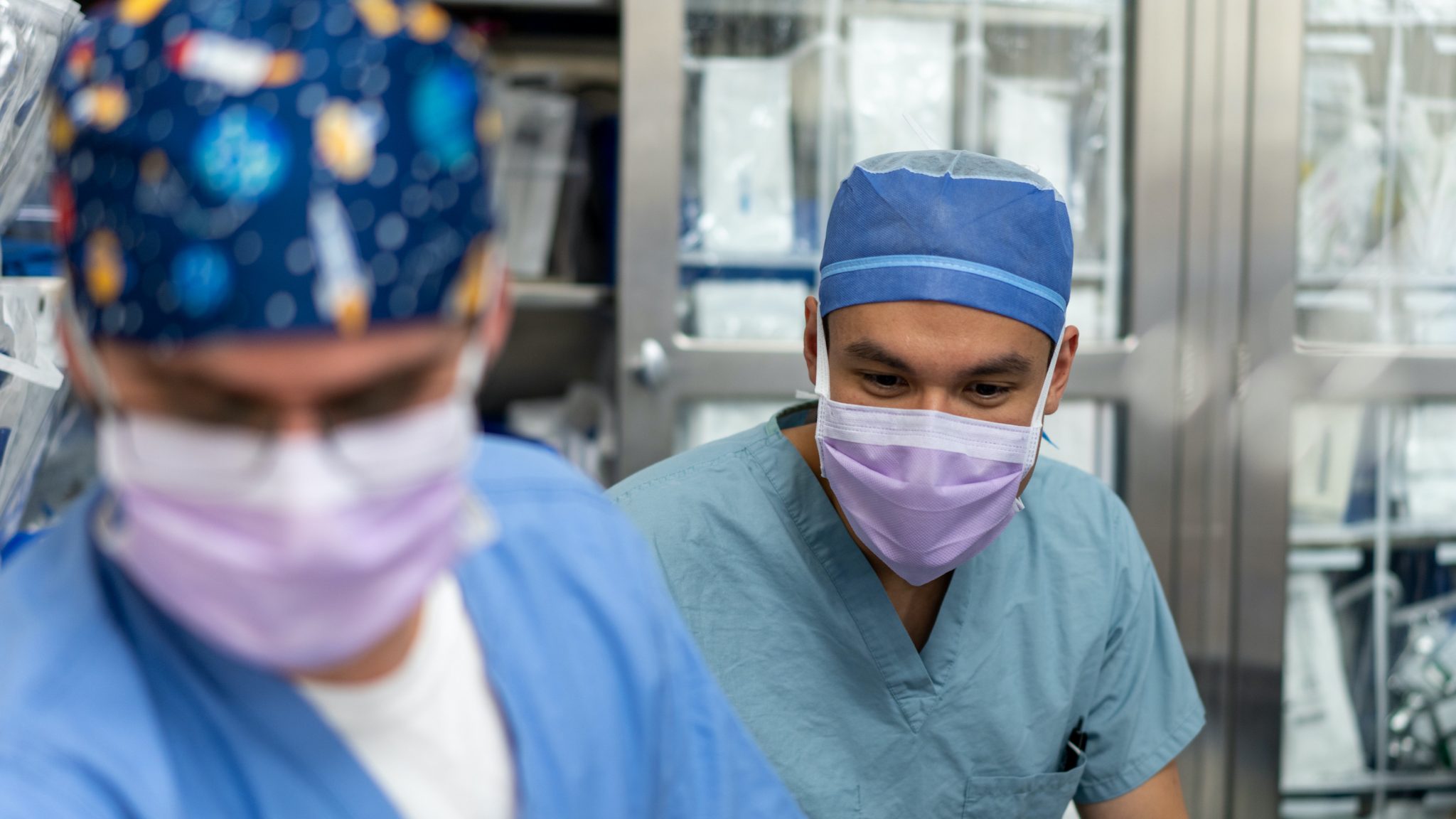
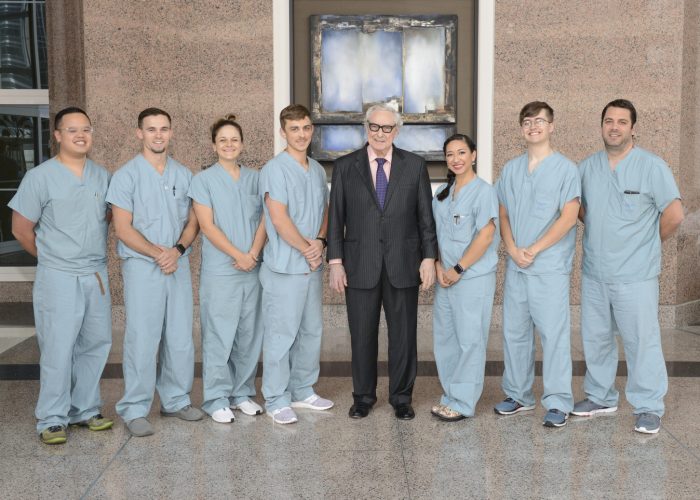
Perfusion Team at Texas Heart Institute

Perfusion Technology
 Texas Heart Institute

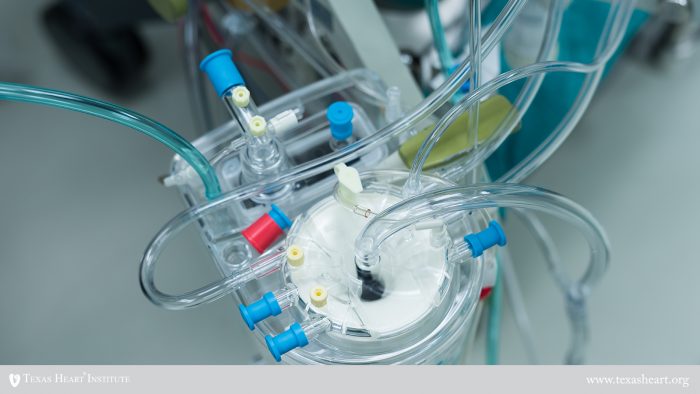
During an open heart operation, the cardiopulmonary bypass (or heart-lung) machine maintains the patient's life by taking over the functions of the heart and lungs. Perfusion technologists set up and operate the heart-lung machine and other sophisticated equipment used in the operating room. In addition, perfusionists, directed by the surgeon and anesthesiologist, are responsible for regulating the patient's levels of oxygen and carbon dioxide; for measuring selected laboratory values such as blood cell count; and for monitoring circulation. At times, perfusionists administer anesthetic or other pharmaceutical agents through the cardiopulmonary bypass circuit. To perform these tasks, perfusionists must thoroughly understand the body's circulatory system and must be able to operate complex equipment.

Although perfusion technologists usually work in hospitals affiliated with large medical centers, they may also work in educational institutions as teachers or researchers. In hospitals, a chief perfusionist generally directs a perfusion team.

Program Information

The Texas Heart Institute (THI) School of Perfusion Technology offers a post-baccalaureate certificate in perfusion technology. The 12-month course trains students to use the cardiopulmonary bypass machine and other equipment associated with open heart surgery. In addition, students receive extensive instruction in cardiopulmonary function and extensive experience in the operating room. Graduates are eligible to become a Certified Clinical Perfusionist after they take the national certification examination, which is given by the American Board of Cardiovascular Perfusion.

Application

Two classes are admitted to the program each year (January and July), with a maximum of 8 students per class. The deadline to apply for the January class is October 1st; the deadline to apply for the July class is April 1st.

Download a copy of the application packet (PDF) here.

Course of Study

Academic courses are held Monday through Friday during the day and some clinical courses may require students to be present evening, nights, weekends, and holidays. Students are also required to take call with a staff perfusionist for specific weeks during the year.

Sample Curriculum

I. Basic Science
a. Anatomy
b. Pathology
c. Physiology
d. Pharmacology

II. Cardiopulmonary Bypass
a. Extracorporeal Circuits
b. Cardiopulmonary Bypass Techniques
c. Myocardial Preservation

III. Blood Conservation Techniques

IV. Mechanical Assist

V. Clinical Rotations

VI. Independent Study

The perfusion school is part of the clinical department; therefore, lectures and exams can be moved forward or delayed based upon the clinical schedule.

Prerequisites

Applicants must have a baccalaureate degree from an accredited college or university and have successfully completed the following courses with a minimum cumulative grade point average of 2.5 on a 4.0 scale:

  • 8 hours general chemistry (with lab)
  • 8 hours general biology (with lab)
  • 6 hours human anatomy and physiology (with lab)
  • 3 hours physics
  • 3 hours college algebra
  • 3 hours statistics 

Applicants must complete the Prerequisite Memo (included in Application packet) to summarize courses taken and in addition, must submit official transcripts from all schools attended.

Tuition and Fees

Tuition is $20,000 per year, payable in 4 installments.  The first installment of $5,000 is due at the time of registration with subsequent payments of $5,000 at specific times during the year. VA benefits are applicable. Financial aid is not available.

Frequently Asked Questions

  • How close must I live to Texas Heart Institute? We suggest students live within 15 minutes of the hospital because of emergency call responsibilities and long clinical days which limit study time. See Location for directions to THI and information about Houston and the Texas Medical Center.
  • What is “Call”? Hospitals require staff for night, weekend, and holiday emergencies and we must respond in a timely manner.
  • How many hours do perfusion students spend at school/clinical per week? Most students spend more than 60 hours per week in class and clinical rotations.
  • What time does class begin? Classes, exams, or clinical responsibilities begin before 6:30 a.m. and can be as late as 9:00 p.m. Clinical procedures can last longer.
  • Do students get time off during the year? This is a working clinical program and students are approved to have 5 days off during the year. We recommend these 5 days be reserved for employment interviews.
  • What are the job opportunities after graduation? We do not guarantee jobs, but available jobs are posted as they become available during the year. Perfusion students must be willing to relocate after graduation.
  • Do graduates receive a certificate or license? Some states require a license and new graduates are given a provisional license for a limited time until they pass the Basic Science and Clinical Application parts of the American Board of Cardiovascular Perfusion exams.
  • What is the expected salary after graduation? Salaries vary depending upon your educational background, work experience, location of the country, and job responsibilities. Positions can be in hospitals, physician groups, or contract perfusion organizations.
  • Can foreign students apply? Foreign students may apply if appropriate VISA documentation is provided along with TOEFL results and evaluations of original transcripts from the WES. Applications are considered on a case-by-case basis and Texas Heart Institute cannot assist with VISA documentation.
  • I will not complete my degree until one or two months after the application deadline; can I still apply for that upcoming class? Yes, you can apply by the application deadline, but your degree and all prerequisites must be completed before the perfusion program begins, if you are accepted.
  • How many applicants are there and how many get accepted? There can be as many as 60 applicants and we accept approximately 8 students for each class. Two 12-month classes begin each year: January to December and June to the following July.
  • Does the school offer financial assistance? No, Texas Heart Institute does not offer financial assistance. We suggest financial arrangements be considered before applying to the perfusion program because tuition is $20,000 and living expenses can be $20,000 per year or more.
  • What is the parking situation? Transportation costs are the responsibility of the student. There are parking garages nearby, and outlying parking lots with shuttle bus access to the Medical Center. Metro buses and MetroRail provide access to Medical Center locations. See location for maps and parking information.

Applications and Contact Information

To obtain an application, download the packet (PDF) or contact

Texas Heart Institute
School of Perfusion Technology
PO Box 20345  MC 1-224
Houston, Texas 77225

For additional information, contact the School of Perfusion Technology.
Phone: 832-355-4026
E-mail: Perfusion Technology


Updated January 2009
Top  
This website is accredited by Health On the Net Foundation. Click to verify. We subscribe to HONcode.
Verify here.

Please contact our Webmaster with questions or comments.
Terms of Use and Privacy Policy
© Copyright 1996-2009 Texas Heart Institute. All rights reserved.
Texas Heart Institute, Texas Heart, Texas Heart Institute Journal, THI, Heart Owner's, Leading With the Heart and Heart of Discovery are members of the
family of trademarks of the Texas Heart Institute.
eHealthcare Leadership Award U.S. NEWS America's Best Hospitals 2009